Mobile Home Dealers Near Me: How to Find a Dealer and Buy a Manufactured Home


The best mobile home dealer near you is a licensed retailer with model homes you can walk through, itemized all-in pricing in writing, and no pressure to use its preferred lender. Start with the dealer locators on manufacturer websites — Clayton Homes, Cavco, and Skyline Champion all publish them — shortlist two or three local dealers, and compare them on total installed cost, not the advertised base price, which usually excludes delivery, setup, and utility connections.
At a glance: A new manufactured home averaged $131,700 in January 2026, according to the US Census Bureau’s Manufactured Housing Survey — $85,400 for a single-section home and $160,100 for a double-section home, before land, foundation, and site work. All manufactured homes built since June 15, 1976 must meet the federal HUD Code, the only national building code in the United States. When comparing dealers near you, get the all-in installed price in writing from at least two dealers, ask what the base price excludes, and check whether you will own the land or lease a lot — that one decision shapes your financing, your monthly costs, and your long-term options.
“Mobile Home” vs “Manufactured Home”: What Are You Actually Buying?
The terms are used interchangeably in everyday speech, but legally there is a clear line. Homes built before June 15, 1976 are “mobile homes,” built to varying standards. Homes built after that date are “manufactured homes,” built to the federal Manufactured Home Construction and Safety Standards — the HUD Code — administered by the US Department of Housing and Urban Development (HUD). The HUD Code is the only federal building code in the United States, and it preempts state and local construction codes for these homes.
That distinction matters when you shop. A pre-1976 mobile home may be difficult or impossible to finance, insure, or move, and many communities will not accept one. A HUD Code home carries a certification label (the red HUD tag) on each section, is built to a national standard for structure, fire safety, energy efficiency, and plumbing and electrical systems, and qualifies for mainstream manufactured-home financing. When a dealer advertises a “mobile home,” ask for the year of manufacture and confirm the HUD label.
Manufactured homes are also different from modular homes, which are built in a factory in sections but to state and local building codes, like a site-built house, and are usually financed as real estate. Manufactured homes are built complete on a permanent chassis and towed to the site. The distinction affects financing, titling, and tax treatment, so be clear which type a dealer is selling you.
How Do I Find Mobile Home Dealers Near Me?
There is no single national directory of every dealer, but several reliable routes will get you a solid shortlist:
- Manufacturer dealer locators. Clayton Homes, Cavco, and Skyline Champion — the largest US manufacturers — each publish a dealer locator on their website. This is the most reliable starting point, because it shows authorized retailers for the brands you are considering.
- MHVillage. This marketplace lists dealers by state and ZIP code alongside community and home listings, and is a useful way to see which dealers are active in a specific area.
- Google Maps and local search. Search “mobile home dealers near me” with your town or ZIP code, then check reviews, photos of the sales lot, and how long the business has operated at that address.
- Your state manufactured housing association. Most states have an industry association with a member directory. Membership is not a guarantee of quality, but associations typically require members to follow a code of conduct.
- State licensing lookup. Most states license manufactured home retailers. Confirm the dealer’s license is current before you visit, and check for disciplinary actions.
Shortlist two or three dealers and visit each one in person. Most manufactured home dealers are independent retailers selling homes from one or more manufacturers — which means the same floor plan can differ significantly in price, finish quality, and included features depending on which dealer you buy through. Getting quotes from multiple dealers, even for the same home, is standard practice.
Single-Wide vs Double-Wide: What Are the Options?

The two main sizes dominate dealer lots. Your choice affects price, space, financing options, and where the home can be placed.
| Single-section (single-wide) | Double-section (double-wide) | |
|---|---|---|
| Typical size | About 600–1,300 sq ft | About 1,000–2,500 sq ft |
| Average price, Jan 2026 (Census Bureau) | $85,400 | $160,100 |
| Sections delivered | One | Two, joined on site |
| Typical installation time (Champion Homes) | 4–5 weeks | 6–7 weeks |
| Best for | Single buyers or couples; smaller lots; tight budgets | Families; buyers who want separate living areas |
| Financing note | More often financed as personal property (chattel loan) | More likely to qualify for real-estate-style loans if on owned land with a permanent foundation |
These Census Bureau prices are for the home only — they exclude land, foundation, delivery, setup, skirting, steps, and utility connections. Dealer guides commonly put the all-in installed cost at roughly $10,000–$30,000 above the base home price depending on site preparation and location, so always ask for the installed total, not the sticker price.
What Should I Ask a Mobile Home Dealer?
Walk in with a written list — a reputable dealer answers them plainly and in writing.
- What is included in the base price, and what costs extra? Ask specifically about delivery, setup, skirting, steps and decks, utility hookups, permits, and site preparation. Get the all-in installed price in writing.
- Which manufacturers do you carry, and can I see the HUD labels? Confirm every home is HUD Code certified and ask to see the certification labels on the home itself.
- Can I walk through a model home or a completed home like the one I would order? Be cautious of a dealer that can only show computer renderings.
- What warranty is included? HUD Code manufactured homes carry a one-year manufacturer’s warranty on structure and systems. Ask what the dealer adds, what extended warranties cover, and who handles warranty claims.
- Which lenders do you work with, and am I required to use them? You are not required to use the dealer’s preferred lender. Getting an independent quote from a credit union or community bank is always worth the effort.
- What is the timeline from order to move-in? Ask for the factory build time, delivery schedule, and installation window in writing.
- If I am placing the home in a community, what are the lot rent, lease terms, and park rules? Ask about rent increases, age restrictions, pet rules, and what happens if the community is sold.
Should I Buy on Land I Own or Lease a Lot?
Buying on your own land. You purchase or already own a parcel, place the home on a permanent foundation, and typically title the home and land together as real estate. This route usually qualifies for the best financing — including FHA loans and the conventional programs below — and gives you control over your site. The trade-off is higher upfront cost: land, foundation, well or septic, and utility runs are all on you. If you are weighing mortgage options, our lifetime mortgage calculator can help you think through long-term borrowing costs, though manufactured-home loans differ from standard mortgages and you should confirm terms with a specialist lender.
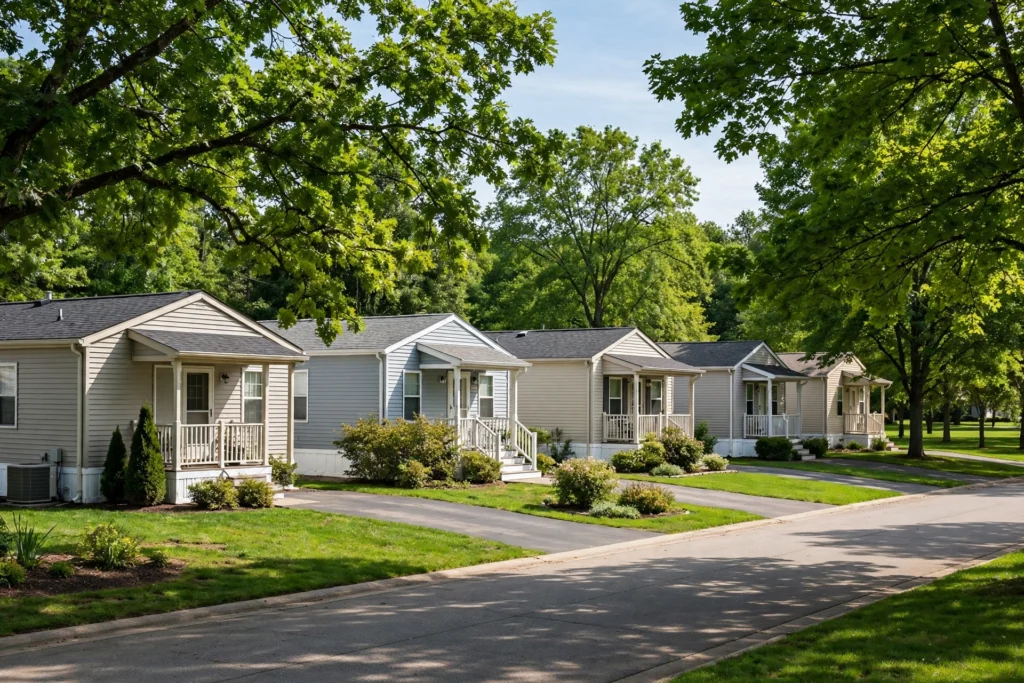
Leasing a lot in a manufactured home community. You buy the home and rent the land it sits on, paying monthly lot rent to the community owner. Upfront costs are lower and communities often provide amenities and maintenance of common areas. The trade-offs are real: lot rent can rise, community rules govern what you can do with your home and lot, and moving the home later is expensive. Before signing a lot lease, read it as carefully as the home purchase contract — including what happens if the community changes hands. If you have ever needed to get out of a tenancy agreement, you will know how binding these documents can be; see our guide on what to do if you have signed a tenancy agreement but want to cancel.
There is no universally right answer. Land ownership usually builds more long-term value; lot leasing usually costs less to start.
How Does Financing Work for a Manufactured Home?
Financing is where manufactured homes differ most from site-built houses, and where dealer guidance matters — but should never be your only source of advice.
| Loan type | How it works | Typical use |
|---|---|---|
| Chattel loan | A loan secured by the home as personal property, similar to a vehicle loan | Homes on leased land; often shorter terms and higher rates than mortgages |
| FHA Title I loan | Government-backed loan for manufactured homes, available for the home alone or home plus lot | Buyers with lower credit scores or smaller down payments |
| FHA Title II / VA / USDA | Standard government-backed mortgages | Homes on owned land, on a permanent foundation, titled as real estate |
| Fannie Mae MH Advantage / Freddie Mac CHOICEHome | Conventional mortgages for qualifying manufactured homes | Newer homes meeting specific construction and foundation standards on owned land |
Chattel loans and FHA Title I loans are the two most popular options for homes placed on leased land in a community, according to manufacturer Champion Homes. Traditional mortgage-style financing is available through Fannie Mae’s Manufactured Home Advantage program and Freddie Mac’s CHOICEHome program for certain homes that meet their requirements.
Get pre-approved before you visit dealers, compare the dealer’s lender against at least one independent lender, and compare loans on total cost — rate, term, fees, and total repaid — not the monthly payment alone. Ask whether the loan is fixed or adjustable, and whether you can pay it off early without penalty.
Red Flags at a Mobile Home Dealer
- A base price with no itemized breakdown. If the dealer will not put the all-in installed price in writing, assume the final cost will be much higher than the advertised figure.
- Pressure to use the dealer’s lender. A dealer can suggest a lender; it cannot require one. Pressure here usually means the dealer earns a fee on the loan.
- No model homes to walk through. A dealer that can only show renderings may not have the inventory or track record it claims.
- Vague warranty answers. “Don’t worry, it’s covered” is not a warranty. Get the manufacturer’s warranty document and the dealer’s own warranty terms in writing.
- No license, or a license the dealer will not verify. Check with your state licensing authority.
The Buying Process, Step by Step
- Decide your budget and your land situation — own land or lease a lot — before you visit dealers.
- Get pre-approved for financing so you know your real price ceiling.
- Shortlist two or three dealers using manufacturer locators, reviews, and license checks.
- Tour model homes and compare floor plans, build quality, and included features.
- Get itemized all-in quotes in writing from each dealer.
- Choose your home and options, confirm the HUD certification, and agree the total price.
- Finalize financing with the lender of your choice — not necessarily the dealer’s.
- Arrange the site: permits, foundation, utility connections, and delivery scheduling.
- Inspect at delivery and after installation, and walk through the finished home with the dealer before signing off.
- Keep every document — purchase agreement, warranty papers, HUD labels, loan documents, and lot lease — in one file.
According to Champion Homes, installation takes an average of four to five weeks for a single-section home and six to seven weeks for a multi-section home, though site preparation and permitting can add time before installation begins.
Frequently Asked Questions
How do I find mobile home dealers near me?
Use the dealer locators on manufacturer websites (Clayton Homes, Cavco, and Skyline Champion all publish them), check MHVillage’s dealer listings by ZIP code, and search Google Maps for local retailers. Verify each dealer’s state license, read recent reviews, and visit at least two dealers in person before deciding.
How much does a new manufactured home cost?
According to the US Census Bureau’s Manufactured Housing Survey, a new manufactured home averaged $131,700 in January 2026 — $85,400 for a single-section home and $160,100 for a double-section home. Those are home-only prices: land, foundation, delivery, setup, and utility connections are extra, and dealer guides commonly put the all-in installed cost roughly $10,000–$30,000 above the base price.
What is the difference between a mobile home and a manufactured home?
Homes built before June 15, 1976 are mobile homes, built to varying standards. Homes built after that date are manufactured homes, built to the federal HUD Code — the only national building code in the United States. Every new home sold today is a manufactured home and carries a HUD certification label.
Can I buy a mobile home if I don’t own land?
Yes. Most dealers sell homes for placement in manufactured home communities, where you buy the home and lease the lot, paying monthly lot rent. Financing for a home on leased land is usually a chattel loan or an FHA Title I loan. Read the lot lease carefully, including rent increase terms and park rules, before committing.
What warranty comes with a new manufactured home?
HUD Code manufactured homes carry a one-year manufacturer’s warranty covering structure and systems. Some dealers offer additional or extended warranties — read exactly what is covered, for how long, and who handles claims before paying for one.
How long does it take to buy and install a manufactured home?
Factory build time varies by manufacturer and order queue. Once the home reaches your site, installation takes an average of four to five weeks for a single-section home and six to seven weeks for a multi-section home, according to Champion Homes. Site preparation, permits, and utility connections happen before installation and can add several weeks.
Bottom Line
Finding a good mobile home dealer near you comes down to comparison: use manufacturer locators to build a shortlist, visit at least two dealers, and judge them on the all-in installed price in writing — not the base price on the sign. Decide early whether you will own the land or lease a lot, because that choice shapes your financing and your monthly costs for years. And remember that the HUD Code label, the one-year manufacturer’s warranty, and an independent inspection are your three best protections.
Sources: US Census Bureau, Manufactured Housing Survey (via Federal Reserve Bank of St. Louis, FRED), January 2026; US Department of Housing and Urban Development, Office of Manufactured Housing Programs; Champion Homes, “How Do I Buy a Manufactured Home?”. Figures checked November 2026.
