You should change your toothbrush every three to four months — or sooner if the bristles look matted or frayed. That is the recommendation of the American Dental Association (ADA), confirmed on its official toothbrushes page, last updated August 2026. The same three-to-four-month rule applies to electric toothbrush heads.

How Often to Change Your Toothbrush at a Glance
| Brush type | Replace every | Replace sooner if |
|---|---|---|
| Manual toothbrush | 3–4 months | Bristles are matted, frayed, or splayed |
| Electric brush head | About 3 months | Indicator bristles fade, or bristles splay |
| Children’s toothbrush | 3–4 months | Bristles splay — kids often chew and press hard |
| After illness | Right after recovery | Cold, flu, strep throat, or mouth infection |
Why Three to Four Months?
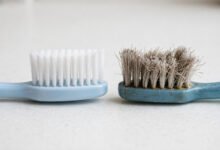
A toothbrush does not stop working on a fixed date — it wears out gradually. The ADA explains that a toothbrush becomes less effective as its bristles wear, because worn bristles remove less plaque from teeth and along the gumline. After three to four months of twice-daily brushing, most brushes show visible wear: bristles bend outward, splay, and lose their stiffness.
Research backs the visual check. A study published in the International Journal of Dental Hygiene found that bristle splaying — the outer tufts spreading beyond the base of the brush head — is a more reliable sign that a brush needs replacing than its age alone. In other words, the calendar is the default, but your eyes are the real test.
Dental organizations broadly agree on the range. One published review of guidance from 18 dental associations found recommended intervals running from two to five months, with the ADA’s three-to-four-month figure the most widely cited.
7 Signs Your Toothbrush Needs Replacing Sooner
Do not wait for the calendar if you notice any of these:
- Frayed or splayed bristles — the outer tufts bend outward instead of standing straight.
- Matted bristles — bristles clump together and no longer spring back after rinsing.
- Bent or broken bristles — individual filaments snap or fold over, usually from brushing too hard.
- Discoloration or buildup — staining or residue at the base of the bristles that does not rinse away.
- A musty smell — a sign the brush is staying damp and harboring bacteria.
- You have been sick — replace the brush after a cold, flu, strep throat, or mouth infection (see below).
- Someone else used it — never share a toothbrush; the CDC notes that sharing can spread body fluids and increase infection risk.
If your brush looks worn after only a month or two, you may be brushing too hard. The ADA recommends a soft-bristled brush and gentle pressure — hard scrubbing wears out bristles faster and can damage gums.
Should You Change Your Toothbrush After Being Sick?
Yes — most dentists recommend replacing your toothbrush after you recover from an illness, especially a cold, flu, COVID-19, strep throat, or any mouth infection such as a yeast infection. The CDC’s toothbrush-care guidance advises replacing the brush after a cold or other illness to prevent contamination, and Cleveland Clinic dentists give the same advice.
The science is nuanced: the ADA notes there is no strong evidence that you will reinfect yourself from your own toothbrush after a common cold. But replacing the brush is cheap, easy insurance — particularly if anyone in the household has a weakened immune system, or if the brush is already near the end of its three-to-four-month life. If you have a mouth infection, your dentist may advise replacing the brush at the start of treatment and again at the end.
While someone in the household is sick, dental experts also suggest giving that person a separate tube of toothpaste (a travel size works) so germs are not passed between brushes via a shared tube.
How Often Should You Change an Electric Toothbrush Head?
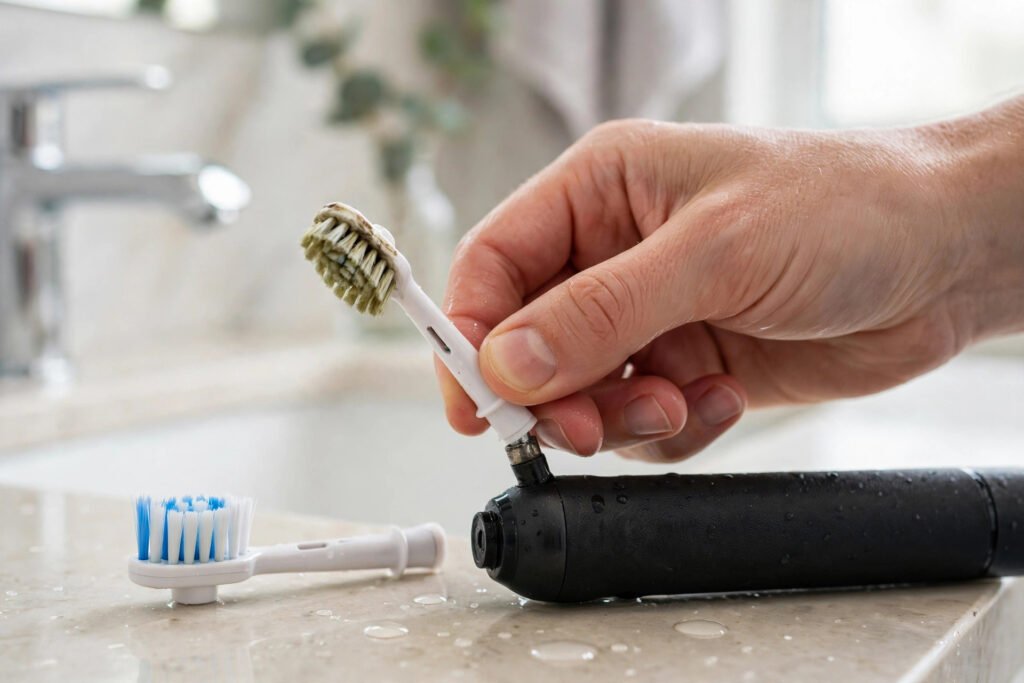
About every three months. The ADA’s three-to-four-month guidance covers toothbrushes in general, and electric brush heads wear out the same way manual ones do. Major manufacturers agree: Philips recommends replacing Sonicare heads every three months of normal use, and Oral-B gives the same three-month guidance for its heads.
Many electric heads make the timing easy — some have blue indicator bristles that fade to white as the head wears out, and some powered brushes have a built-in reminder. If the bristles splay before three months, replace the head early, just as you would a manual brush.
How to Make Your Toothbrush Last (and Stay Clean)
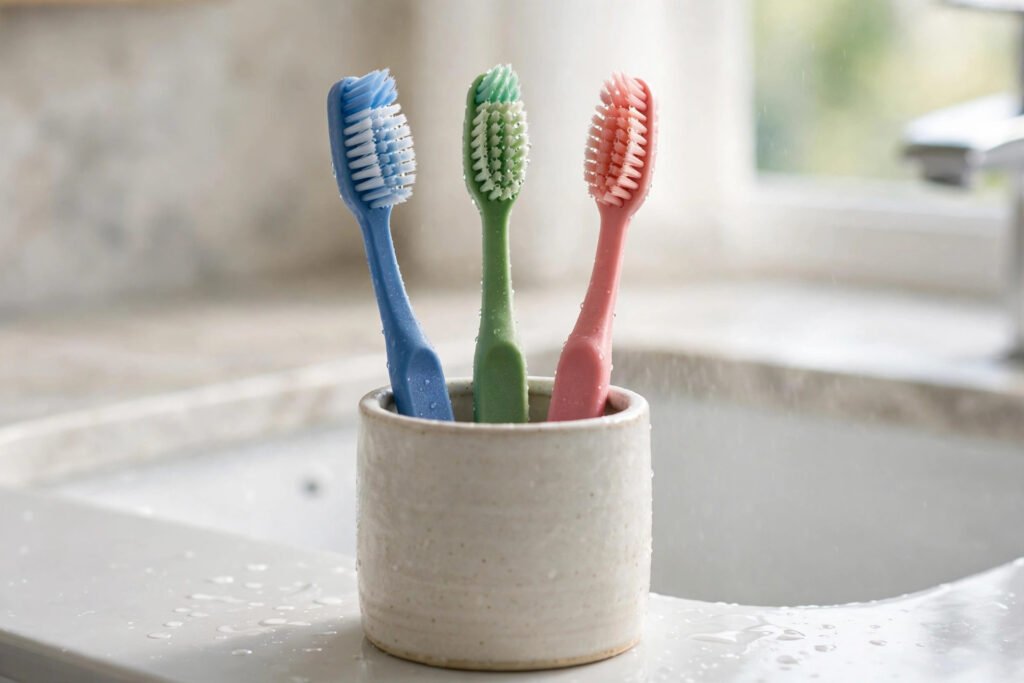
Proper care will not extend a brush past four months, but it keeps it effective and hygienic while you use it:
- Rinse thoroughly after every brushing to remove toothpaste and debris, then tap off excess water.
- Store it upright in an open holder so it air-dries between uses. The CDC recommends letting the brush air dry, and the ADA advises against routinely covering a brush or storing it in a closed container while wet — a moist environment encourages bacterial growth.
- Keep brushes apart. Do not let family members’ brush heads touch in a shared holder.
- Store it away from the toilet, and close the toilet lid before flushing — every flush sends droplets into the air.
- Do not share. Everyone in the household needs their own brush.
- Sanitizing is optional. The ADA notes there is little data on toothbrush sanitizing; rinsing and air-drying is enough for most people. If you do use a sanitizer device, the ADA advises choosing one cleared by the U.S. Food and Drug Administration (FDA).
What About Children’s Toothbrushes?
The same three-to-four-month rule applies to children — the ADA makes no separate rule for kids. In practice, children’s brushes often need replacing sooner, because children tend to chew the bristles and press too hard. Check your child’s brush monthly, and replace it as soon as the bristles splay. A worn brush cleans less effectively, and children are still learning proper technique, so a fresh brush matters even more for them.
What Happens If You Use a Toothbrush Too Long?
An old toothbrush is not dangerous in the dramatic sense — the ADA cites studies finding no evidence of negative oral-health effects from the normal bacteria on a toothbrush. The real cost is effectiveness: frayed bristles miss plaque along the gumline and between teeth, which over time contributes to cavities and gum disease. Worn, splayed bristles can also irritate gums. Given that a new brush costs very little, stretching one past four months is a false economy. Oral health problems can escalate quickly when plaque builds up — for example, gum infections around wisdom teeth can become serious, as explained in our guide to can pericoronitis kill you.
How to Remember to Replace Your Toothbrush
- Seasonal rule: swap your brush on the first day of each season — four times a year, close to the ADA schedule.
- Phone reminder: set a recurring reminder every three months.
- Buy in bulk: keep a multipack in the bathroom cabinet so a fresh brush is always on hand.
- Replace as a household: change everyone’s brush on the same day so no one is forgotten.
Toothbrush Replacement FAQs
How often should you change your toothbrush?
Every three to four months, according to the American Dental Association — or sooner if the bristles are visibly matted or frayed.
How often should you change an electric toothbrush head?
About every three months. Philips and Oral-B both recommend three-month replacement for their brush heads, and the ADA’s three-to-four-month guidance applies to electric heads as well as manual brushes.
Should I replace my toothbrush after being sick?
Yes. The CDC recommends replacing your toothbrush after a cold or other illness, and dentists advise the same after flu, strep throat, or a mouth infection.
How do I know if my toothbrush needs replacing?
Look at the bristles: if they are frayed, splayed outward, matted, or bent, the brush needs replacing — even if it is less than three months old. Discoloration or a musty smell are also signs.
Can an old toothbrush make you sick?
There is no strong evidence that normal bacteria on a toothbrush cause illness, according to the ADA. The main risk of an old brush is that it cleans less effectively, allowing plaque buildup that contributes to cavities and gum disease.
How often should children change their toothbrush?
Every three to four months, the same as adults. Check children’s brushes monthly, though — kids often chew bristles or press too hard, so their brushes may need replacing sooner.
The Bottom Line
Change your toothbrush — or your electric brush head — every three to four months, and sooner if the bristles fray, splay, or mat. Replace it after any illness, store it upright and uncovered so it air-dries, and never share it. It is one of the cheapest, simplest habits in oral care, and it keeps your brushing effective.
Disclaimer: This article is for general information only and is not medical advice. If you have concerns about your oral health, speak to your dentist or another qualified health professional.
Sources: American Dental Association, “Toothbrushes” (ada.org, updated August 2026); Centers for Disease Control and Prevention, oral health and toothbrush-care guidance (cdc.gov); Cleveland Clinic Health Essentials.