Used Car Dealers Near Me: How to Find a Trustworthy Dealer and Buy With Confidence


The best used car dealer near you is a licensed dealer with strong recent reviews, transparent out-the-door pricing, and a willingness to let your own mechanic inspect any car before you buy. Start with a shortlist of three dealers, check each one against your state’s complaint records, and never judge a dealer by its advertised price alone — the out-the-door price, the warranty terms on the FTC Buyers Guide, and the inspection results matter far more than the number on the windshield.

At a glance: As of November 2026, the average used vehicle on a US dealer lot is listed at $27,235, up nearly 6% year over year and the highest monthly average since December 2022, according to Cox Automotive’s September 2026 data — so comparing dealers matters more than ever. The fastest reliable route is to shortlist three nearby dealers from reviews and manufacturer locators, verify each one’s license and complaint history, read the FTC Buyers Guide on every car you consider, get a vehicle history report, and pay for an independent pre-purchase inspection before signing anything.
How Do I Find Used Car Dealers Near Me?
Finding dealers is the easy part — a map search for “used car dealers near me” will return dozens. The real work is narrowing that list to dealers worth visiting. Use several sources rather than relying on one:
- Google Maps and search results. Start here for the full local picture: hours, photos of the lot, and recent reviews. Weight reviews from the last 3–6 months more heavily than the overall star rating — a dealership can change ownership, and old reviews may describe a different business.
- Manufacturer certified pre-owned (CPO) locators. If you want a specific brand, the manufacturer’s own website lists franchised dealers offering certified pre-owned vehicles, which come with a manufacturer-backed warranty and a multi-point inspection.
- Your state’s dealer licensing authority. Every state licenses motor vehicle dealers. Your state DMV or motor vehicle dealer board usually has an online lookup where you can confirm a dealer is currently licensed and see any disciplinary history. A dealer that cannot or will not give you its license number is not worth visiting.
- State and local consumer protection agencies. The Federal Trade Commission (FTC) advises checking whether unresolved complaints are on file about a particular dealer before you visit.
- Word of mouth. Ask friends, family, and coworkers where they bought their last car — and where they had a bad experience. A personal recommendation from someone who completed a purchase is worth more than a dozen anonymous reviews.
Build a shortlist of three dealers and visit at least two in person before deciding.
What Kind of Used Car Dealer Should I Choose?
Not all dealers operate the same way. The right type depends on your budget, your credit situation, and how much warranty protection you want.
| Dealer type | What it offers | Best for | Watch out for |
|---|---|---|---|
| Franchised dealer | New and used cars from one manufacturer; CPO programs; service department on site | Buyers who want a manufacturer-backed warranty and factory-trained service | Higher prices; pressure to buy add-ons in the finance office |
| Independent dealer | Used cars of many brands; often smaller lots and lower overhead | Budget buyers; shoppers who want variety in one place | Quality varies widely — licensing and reputation checks matter most here |
| Buy-here-pay-here (BHPH) | In-house financing, often for buyers with poor credit | Buyers who cannot get a bank or credit union loan | Higher interest rates and shorter terms; some install GPS trackers or payment devices |
| Online-only retailer | Browse, buy, and arrange delivery online; fixed no-haggle pricing | Buyers who dislike negotiation and want home delivery | You cannot test drive before purchase; return windows are short, so inspect promptly |
What Should I Check Before Visiting a Dealer?
Do this homework at home, before any salesperson has your attention. It takes about 30 minutes per dealer.
Read reviews properly. Look for patterns rather than individual complaints. One angry review about a rude receptionist is noise; five reviews mentioning the same problem — undisclosed accident damage, fees appearing at signing, warranty claims refused — is a signal. Also note how the dealer responds to negative reviews: a specific, professional reply suggests a business that takes complaints seriously.
Check complaint records. Search the dealer’s name with your state attorney general’s office and the Better Business Bureau. The FTC recommends checking with state and local consumer protection agencies for unresolved complaints. A long history of unresolved complaints is a reason to cross a dealer off your list.
The Buyers Guide: The One Document You Must Read
Under the FTC’s Used Car Rule (16 CFR Part 455), every dealer must display a standardized window form called a Buyers Guide on each used car offered for sale — and must give you a copy after the sale. The rule applies to any dealer that has sold or offered five or more used vehicles in the previous 12 months, so it covers virtually every established used car lot in the country.
The Buyers Guide tells you, in writing:
- Whether the car is sold “as is” or with a warranty. If the “As Is — No Dealer Warranty” box is checked, the dealer pays for no repairs after the sale. If a warranty box is checked, the guide must state whether it is full or limited, which systems are covered, what percentage of parts and labor the dealer pays, and how long coverage lasts.
- The vehicle’s identity — make, model, model year, and VIN.
- Whether a service contract is available and, if so, at what extra cost.
- Who to contact at the dealership if something goes wrong after the sale.
Two things about the Buyers Guide catch buyers out. First, the guide’s warranty terms override the sales contract if the two conflict — so if a salesperson promises warranty cover verbally but the guide says “as is,” the guide wins. Get every promise in writing and make sure the guide matches. Second, the guide itself tells you to ask for an independent inspection and to get a vehicle history report. Take that advice: the FTC states plainly that a history report is not a substitute for an independent mechanical inspection.
Note also that federal law does not give you a three-day cooling-off period to return a car. The FTC is explicit: in most states, the right to return a car within a few days exists only if the dealer chooses to offer it. If a return policy matters to you, ask about it before you sign and get it in writing.
What Questions Should I Ask a Used Car Dealer?
Walk in with a written list — a good dealer answers these directly.
- Can I see the vehicle history report? A report from Carfax or AutoCheck may show reported accidents, title problems (including salvage or flood titles), ownership records, and odometer history. Many dealers provide one free; if not, you can run one yourself using the VIN.
- Has the car been inspected, and can I see the inspection report? Ask what the inspection covered and who performed it. A dealer inspection is useful but is not a substitute for your own.
- Can my mechanic inspect the car before I buy? The right answer is yes, on or off the lot. A dealer that refuses an independent inspection is a dealer to walk away from.
- What is the out-the-door price? Ask for the total in writing, including taxes, registration, documentation fees, and any add-ons. The advertised price is only the starting point.
- What warranty comes with the car? Read the Buyers Guide together with the salesperson and ask them to explain anything unclear.
- Are there any open safety recalls? You can also check yourself using the VIN on the National Highway Traffic Safety Administration’s recall lookup.
- What add-ons are included in the price? Gap insurance, VIN etching, paint protection, and extended service contracts are optional. The FTC warns buyers to be aware of add-ons and to decide separately whether each one is worth its cost.
Red Flags That Mean You Should Walk Away
Some problems are fixable with negotiation. These are not — if you see them, leave.
- No Buyers Guide on the car. It is a federal requirement. A missing guide means the dealer is either careless or cutting corners on the law.
- Refusal to allow an independent inspection. There is no legitimate reason to refuse.
- No vehicle history report, or a report the dealer will not share. Transparency about a car’s past is basic.
- Prices far below market with no explanation. A car listed thousands below comparable vehicles usually has a hidden problem — a salvage title, flood damage, odometer rollback, or undisclosed accident history.
- High-pressure tactics. “This price is only good today” or “another buyer is coming in an hour.” A good deal today is still a good deal tomorrow.
- Title problems. A dealer that cannot produce a clean title, or that asks you to sign paperwork with blank fields, is not a dealer to trust.
How Does Financing Work at a Used Car Dealer?
Most dealers offer financing through banks, credit unions, or their own finance partners. But dealer financing is a product the dealer profits from, so go in prepared:
- Get pre-approved before you shop. A pre-approval from your bank or credit union gives you a rate to compare against the dealer’s offer and a firm budget ceiling.
- Negotiate the price first, then the financing. Agree on the out-the-door price before discussing monthly payments. Focusing on the monthly payment lets a dealer stretch the loan term to make an expensive car look affordable.
- Compare the total cost, not just the monthly payment. A longer term means lower payments but more interest overall. Ask for the total amount you will pay over the life of the loan.
- Read the finance paperwork line by line. Check the interest rate, term, total amount financed, and every add-on. If anything differs from what was discussed, stop and ask before signing.
If your credit is limited, a buy-here-pay-here dealer may be an option, but compare its terms against a credit union loan first — BHPH rates are typically much higher, and the total cost difference can run into thousands of dollars.
The Test Drive and the Independent Inspection
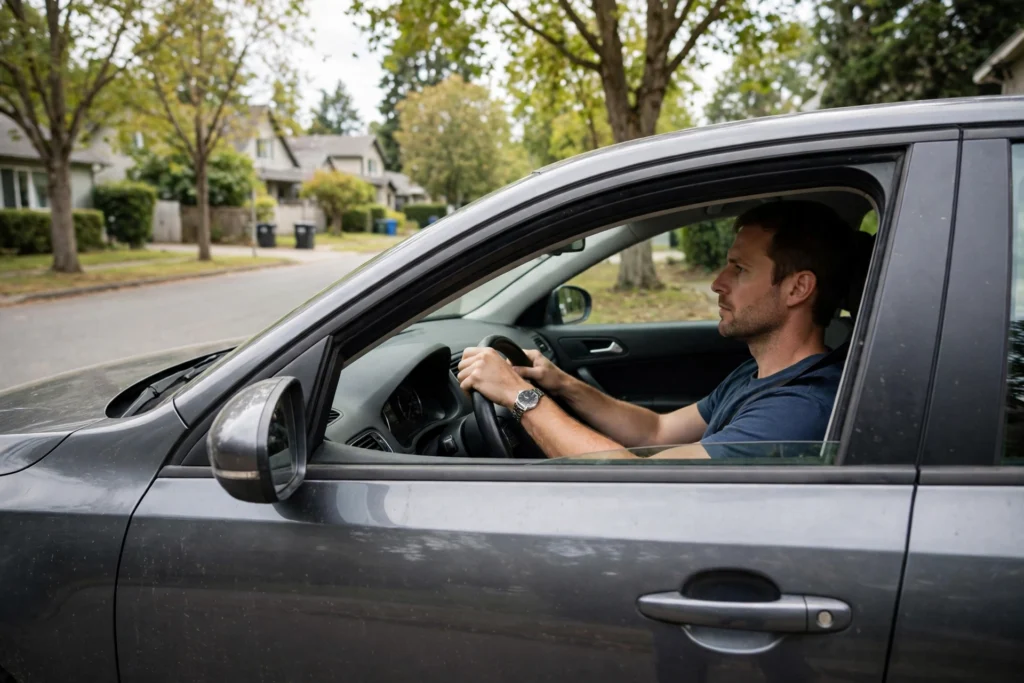
Never buy a used car without driving it — and drive it the way you will actually use it. Take it on the highway, test the brakes firmly (in a safe place), turn the air conditioning and heating on, try every window and switch, and listen for unusual noises. A 10-minute loop around the block is not a test drive.
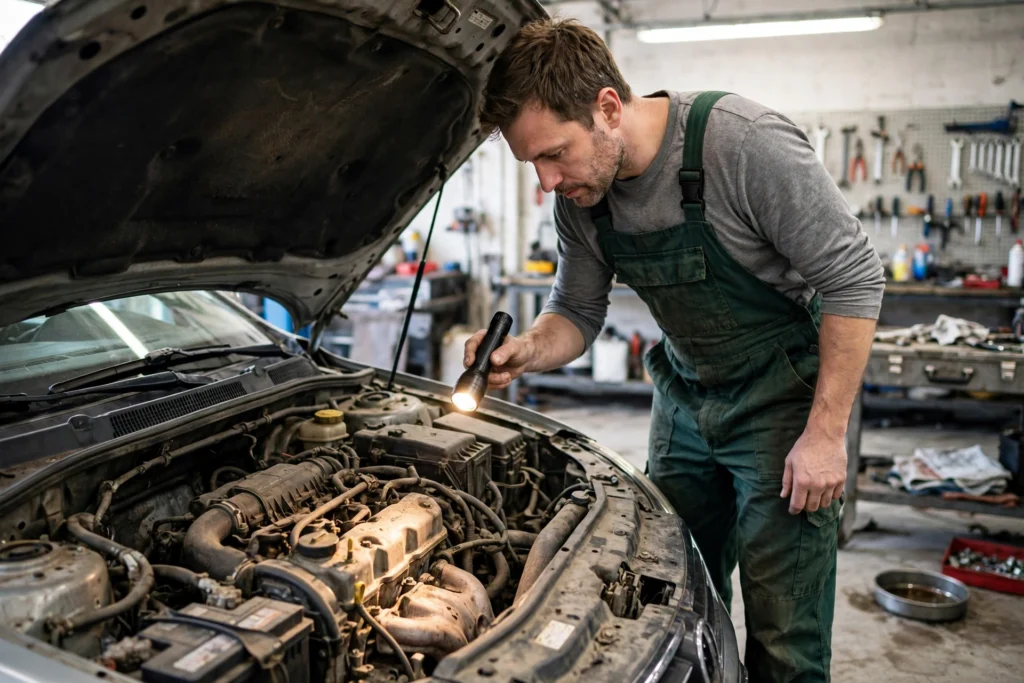
Then get the independent inspection. A pre-purchase inspection (PPI) by a mechanic who works for you, not the seller, typically costs roughly $186 to $273 for labor, according to RepairPal’s published average from September 2026, varying by location and vehicle. It is the best money in the entire buying process: a good inspection can uncover accident repairs, frame damage, worn suspension, leaking seals, and failing components that no history report will show. If the inspection finds problems, you can renegotiate, ask the dealer to fix them, or walk away — all cheaper than discovering them after you own the car.
If you need a state safety or emissions inspection after purchase, it is worth knowing what that involves before you buy — see our guide to state inspections near me. And if accessibility matters to you or a family member, some dealerships offer facilities such as hearing loops; see car dealerships with a hearing loop.
Frequently Asked Questions
How do I find the best used car dealer near me?
Shortlist three dealers using recent Google reviews, manufacturer CPO locators, and your state dealer licensing lookup. Check each one for unresolved complaints with your state attorney general or consumer protection agency, then visit at least two in person. The best dealer is the one with transparent pricing, a clean complaint record, and no objection to an independent inspection.
Should I buy from a franchised dealer or an independent dealer?
It depends on what you value. Franchised dealers offer manufacturer-backed certified pre-owned programs and on-site service departments, usually at higher prices. Independent dealers often have lower prices and more variety but vary more in quality, so reputation checks matter even more.
What is the FTC Buyers Guide?
The Buyers Guide is a standardized window form that federal law (the FTC’s Used Car Rule, 16 CFR Part 455) requires dealers to display on every used car offered for sale. It states whether the car is sold “as is” or with a warranty, identifies the vehicle by VIN, and names a contact for post-sale problems. Its warranty terms override the sales contract if they conflict.
Can I return a used car after buying it?
Federal law does not require dealers to let you return a car. In most states, a return or exchange is only possible if the dealer offers it — so ask about the return policy before you sign and get it in writing. Some states have limited used-car lemon laws, but these vary widely; check your state attorney general’s guidance.
Is a vehicle history report enough, or do I need an inspection too?
You need both. A history report shows records — accidents, title brands, odometer readings — but it cannot show the car’s current mechanical condition. The FTC states that a vehicle history report is not a substitute for an independent inspection by a mechanic of your choice.
How much should a pre-purchase inspection cost?
RepairPal’s published average from September 2026 puts a typical pre-purchase inspection at roughly $186 to $273 for labor, varying by location and vehicle type. Given that the average used car is listed at over $27,000, an inspection costing a few hundred dollars is inexpensive protection against a bad purchase.
Bottom Line
Finding a good used car dealer near you is less about location and more about verification: license, reviews, complaint history, transparent pricing, and a willingness to let your mechanic inspect the car. Use the FTC Buyers Guide as your written record of what you are buying, get the out-the-door price in writing before you negotiate financing, and never skip the independent inspection. In a market where the average used car lists at $27,235, an hour of homework and a few hundred dollars on an inspection are the cheapest insurance you will ever buy.
Sources: Federal Trade Commission, “Buying a Used Car From a Dealer” (consumer.ftc.gov); FTC Used Car Rule, 16 CFR Part 455; Cox Automotive used-vehicle listing data, September 2026; RepairPal pre-purchase inspection pricing, September 2026. Figures checked November 2026.
