The best things to do in Montana are its two national parks — Glacier and Yellowstone — plus the mountain towns of Bozeman, Missoula and Whitefish, the clear waters of Flathead Lake, and the historic Little Bighorn Battlefield. Montana, the fourth-largest state in the US by area, packs more than a million acres of Glacier National Park, the northern and western gates of Yellowstone, and some of the best skiing in North America into one sparsely populated, wide-open state. This guide covers the must-see sights, the practical costs and the seasonal timing you need to plan a trip, with facts checked against the National Park Service and Montana tourism sources as of November 2026.


Montana at a Glance
| Fact | Detail |
|---|---|
| Nickname | The Treasure State / Big Sky Country |
| Size | Fourth-largest US state by area |
| National parks | Glacier National Park; Yellowstone’s North (Gardiner) and West (West Yellowstone) entrances |
| Glacier entry fee (2026) | $35 per private vehicle, summer (May 1–Oct 31); $25 winter (Nov 1–Apr 30); 7-day pass |
| Yellowstone entry fee (2026) | $35 per private vehicle; 7-day pass |
| Non-US resident fee (2026) | Extra $100 per person aged 16+ at both parks, unless entering on an annual pass |
| Best months | June–September for hiking and lakes; December–March for skiing |
| Biggest ski resort | Big Sky Resort — about 5,850 skiable acres |
| Largest lake | Flathead Lake — the largest natural freshwater lake west of the Mississippi |
What Is Montana Best Known For?
Montana is best known for Glacier National Park, its share of Yellowstone, and a landscape of mountains, prairies and big rivers that has earned it the nickname Big Sky Country. The state has just over one million residents spread across a huge area, which means the defining Montana experience is space: long drives between small towns, dark night skies, and trailheads where you may not see another person all day.
The state rewards travelers who plan around the seasons. Summer opens the high mountain roads and hiking trails; winter turns the same mountains into ski country. Shoulder seasons offer thinner crowds but unpredictable weather and partial road openings, so always check conditions before you go.
Explore Glacier National Park
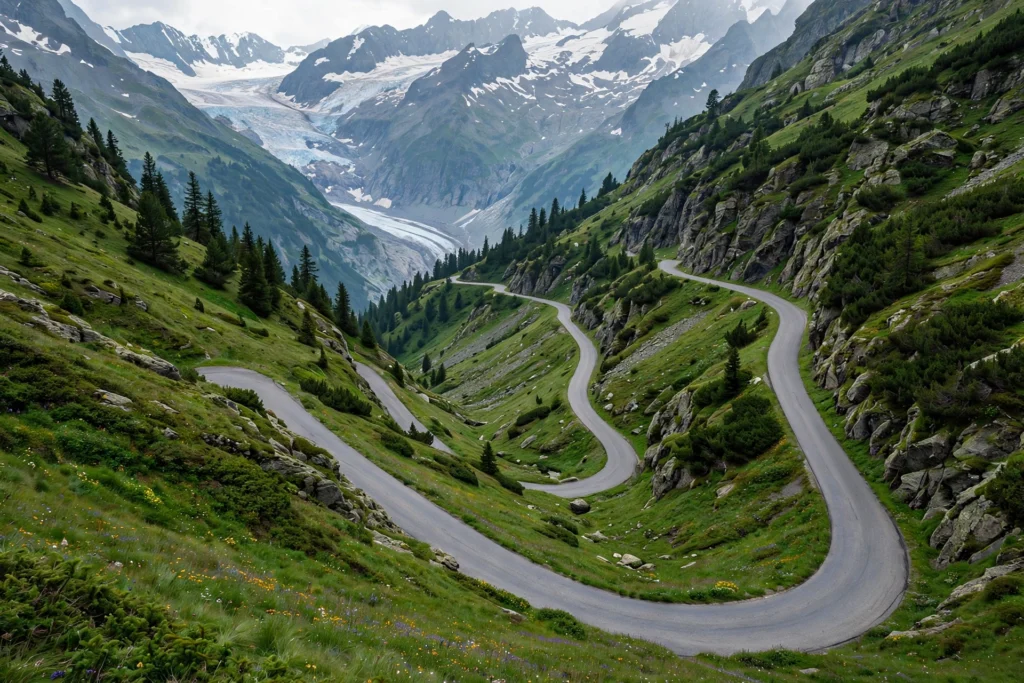
Glacier National Park is Montana’s single greatest attraction, and the reason most first-time visitors come to the state. The park covers more than one million acres of the northern Rocky Mountains, with 26 named glaciers, over 700 miles of hiking trails, and the Going-to-the-Sun Road — a 50-mile engineering marvel that crosses the Continental Divide at Logan Pass (6,646 feet), according to the National Park Service.
What to do in Glacier
- Drive Going-to-the-Sun Road. The full 50-mile crossing from West Glacier to St. Mary is one of the most famous scenic drives in America. It typically opens fully in late June or early July, depending on snowplowing, and closes for the season in October. As of early November 2026, the road was closed for the season at Avalanche Creek on the west side and Jackson Glacier Overlook on the east side, per NPS alerts.
- Hike to Grinnell Glacier or Hidden Lake. The Grinnell Glacier trail from Many Glacier and the Hidden Lake Overlook trail from Logan Pass are the park’s two classic day hikes, offering glacier views and frequent mountain goat sightings.
- Take a boat tour on Lake McDonald or St. Mary Lake. Boat tours run in summer and are an easy way to see the park’s glacier-carved valleys without a long hike.
- Visit Many Glacier and Two Medicine. These quieter eastern valleys offer the park’s best wildlife viewing and some of its most dramatic scenery, away from the Going-to-the-Sun crowds.
Glacier practical details (2026)
Entry costs $35 per private vehicle in summer ($25 from November 1 to April 30), $30 per motorcycle, and $20 per person on foot or bicycle, with the pass valid for seven days, according to the National Park Service. Children under 16 enter free, and the park is cashless — pay by card at entry kiosks or buy a pass online in advance.
A major change in 2026: Glacier dropped its vehicle reservation system entirely. No timed-entry ticket was required anywhere in the park in 2026, including Going-to-the-Sun Road, Many Glacier, Two Medicine and the North Fork — a return to spontaneous access after several seasons of reservations. Instead, the park managed congestion with a three-hour parking limit at Logan Pass and a ticketed shuttle from July 1 through Labor Day. As of November 2026, the park had not announced its access rules for the 2027 season, so check the National Park Service’s Glacier vehicle reservations page before booking a 2027 trip.
Since January 1, 2026, non-US residents aged 16 and older pay an additional $100 per person on top of the entrance fee unless they enter with an annual pass; a non-resident America the Beautiful annual pass costs $250, compared with $80 for US residents.
Enter Yellowstone From the Montana Side
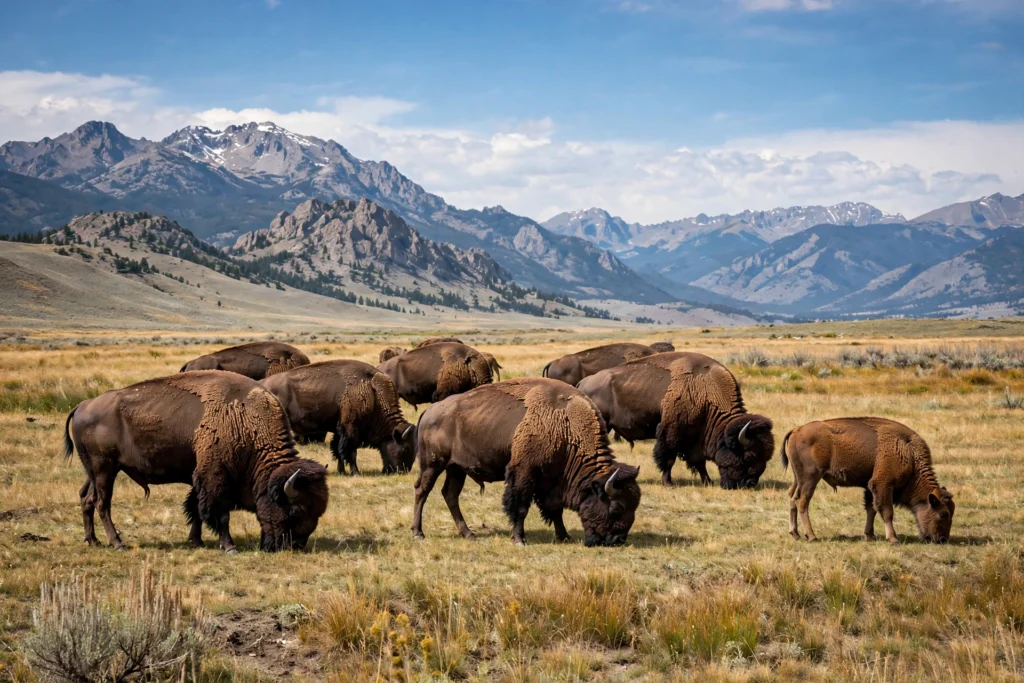
Yellowstone National Park sits mostly in Wyoming, but two of its five entrances are in Montana — and they are the best bases for a Montana-centered trip. The North Entrance at Gardiner is the park’s only entrance open to wheeled vehicles year-round, and the West Entrance at West Yellowstone is the busiest gateway to the geyser basins. From Gardiner you can drive straight to Mammoth Hot Springs; from West Yellowstone, Old Faithful and the Grand Prismatic Spring are an easy day’s loop.
Yellowstone charges $35 per private vehicle for a seven-day pass, $30 per motorcycle and $20 per person on foot or bicycle, per the National Park Service, with the same $100 non-US resident surcharge that applies at Glacier since January 2026. No timed-entry reservation is required to enter Yellowstone. The park’s roads are open seasonally, with most interior roads closing to cars in early November and reopening in spring; winter access is by snowcoach or snowmobile from mid-December to mid-March. Always confirm current road status and fees on the National Park Service’s Yellowstone fees page before traveling.
Inside the park, the must-sees from the Montana side are Old Faithful and the Upper Geyser Basin, the Grand Prismatic Spring — the largest hot spring in the United States — the Grand Canyon of the Yellowstone, and the Lamar Valley, often called America’s Serengeti for its wolves, bison and grizzly bears. Wildlife is genuinely wild here: the NPS advises staying at least 100 yards from bears and wolves and 25 yards from bison and elk, and carrying bear spray on hikes.
Visit Montana’s Mountain Towns: Bozeman, Missoula and Whitefish
Bozeman
Bozeman, in the Gallatin Valley of southwest Montana, is the state’s fastest-growing city and the best base for combining Yellowstone, Big Sky skiing and a lively downtown. Its headline attraction is the Museum of the Rockies, a Smithsonian-affiliated museum with one of the world’s finest dinosaur fossil collections, including Tyrannosaurus rex specimens found in Montana.
Missoula
Missoula, Montana’s second-largest city, sits where five mountain valleys meet along the Clark Fork River. It is home to the University of Montana and has the state’s most varied food and arts scene, plus easy access to the Rattlesnake Wilderness and the Bitterroot Valley.
Whitefish
Whitefish is a classic ski town on the edge of Glacier National Park, with a historic railway depot, a walkable downtown of galleries and restaurants, and Whitefish Mountain Resort on Big Mountain just above town. It is the most charming base for the west side of Glacier.
Relax on Flathead Lake
Flathead Lake, in northwest Montana, is the largest natural freshwater lake west of the Mississippi River, covering roughly 197 square miles with a maximum depth of about 370 feet, according to Montana Fish, Wildlife & Parks. Its water is famously clear, and the lake is ringed by cherry orchards, small towns and state park units.
The best ways to enjoy it are kayaking or paddleboarding from one of the Flathead Lake State Park units, taking a boat to Wild Horse Island State Park — a 2,163-acre island accessible only by boat, home to wild horses, bighorn sheep and eagles — and driving the scenic loop on US Highway 93 and Route 35. Water temperatures peak in the mid-to-upper 60s Fahrenheit in July and August, so the lake is refreshing rather than warm. Note that the southern half of the lake lies within the Flathead Indian Reservation of the Confederated Salish and Kootenai Tribes, and fishing or recreating on tribal waters requires a tribal permit in addition to a state license.
Step Into History at Little Bighorn Battlefield
Little Bighorn Battlefield National Monument, near Crow Agency in southeastern Montana, preserves the site of the Battle of the Little Bighorn of June 25–26, 1876, when a combined force of Lakota, Northern Cheyenne and Arapaho warriors defeated Lt. Col. George Armstrong Custer and the US 7th Cavalry. The 765-acre monument lies within the Crow Indian Reservation, about 65 miles southeast of Billings, and includes the Custer National Cemetery, Last Stand Hill, and the Indian Memorial, dedicated in 2003, which honors the Native warriors who fought here.
The site is a place of remembrance rather than entertainment, and the NPS interpretation now tells the story from both sides. Allow two to three hours for the visitor center, the self-guided driving tour and the walking trails. Note that the park was rebuilding its visitor center during 2026 and operated on a reduced Friday-to-Sunday schedule for part of the year before returning to seven-day operation in July 2026; check nps.gov/libi for the current schedule before visiting.
Soak in Montana’s Hot Springs
Montana’s geothermal hot springs are one of its best-kept secrets. Chico Hot Springs, near Livingston and the north entrance to Yellowstone, pairs natural pools with a historic lodge and restaurant. Fairmont Hot Springs, near Anaconda, offers large indoor and outdoor pools fed by natural mineral water. Quinn’s Hot Springs, in the Clark Fork Valley west of Missoula, has several pools of different temperatures set against a mountainside. Hot springs are a year-round activity and a perfect recovery stop after a day of hiking or skiing — but hours, prices and pool availability change seasonally, so check each resort’s own website before you go rather than relying on a guidebook figure.
Go Skiing at Big Sky and Whitefish
Montana has more than a dozen ski areas, led by two nationally significant resorts. Big Sky Resort, an hour south of Bozeman, offers about 5,850 skiable acres and 4,350 feet of vertical drop, making it one of the largest ski resorts in the United States. Whitefish Mountain Resort, above the town of Whitefish, offers about 3,000 skiable acres and a 2,353-foot vertical drop, with a reputation for light powder and uncrowded slopes. Both resorts typically run from late November or early December through April, with exact opening dates depending on snowfall. Lift ticket prices vary by date and are sold online in advance; check each resort’s site for current pricing rather than trusting a printed figure.
When Is the Best Time to Visit Montana?
| Season | What’s open | Best for |
|---|---|---|
| Summer (Jun–Sep) | All park roads, hiking, lakes, rafting | First-time visitors, families, hiking |
| Autumn (Sep–Oct) | Parks quieter; Going-to-the-Sun Road closes in Oct | Wildlife, fall color, fewer crowds |
| Winter (Dec–Mar) | Ski resorts; Yellowstone by snowcoach | Skiing, snow sports, winter Yellowstone |
| Spring (Apr–May) | Lower-elevation trails; high roads still closed | Waterfalls, shoulder-season deals |
For most travelers, the sweet spot is mid-June through September, when Going-to-the-Sun Road is fully open and all of Yellowstone’s roads are accessible. September is a favorite among experienced visitors: the crowds thin, the weather is usually still fine, and wildlife is active. Winter visitors should come for skiing and accept that the high mountain roads are closed.
How Many Days Do You Need in Montana?
A long weekend (3–4 days) is enough for one national park plus a town. A full week lets you combine Glacier and Yellowstone with a stop at Flathead Lake or a hot springs resort. Ten days to two weeks opens up the whole state, including Little Bighorn and the Beartooth Highway — the spectacular mountain pass between Red Lodge and Yellowstone’s Northeast Entrance. Driving distances are long: Glacier to Yellowstone is roughly a five-to-six-hour drive, so build travel days into any itinerary.
Montana rewards the unhurried traveler. Whether you come for the glaciers, the geysers, the ski slopes or simply the open road under a very big sky, the state’s best experiences share one thing: they are bigger, wilder and quieter than you expect. If you enjoy planning trips around a single destination, you may also like our guide to things to do in Pensacola, Florida for a very different American getaway.
Frequently Asked Questions
What is the number one thing to do in Montana?
Glacier National Park is the number one thing to do in Montana. Driving the 50-mile Going-to-the-Sun Road across Logan Pass, hiking to Grinnell Glacier or Hidden Lake, and exploring the Many Glacier valley are the experiences most visitors rank highest.
How much does it cost to enter Glacier National Park in 2026?
A private vehicle pass costs $35 in summer (May 1–October 31) and $25 in winter (November 1–April 30), valid for seven days. Motorcycles cost $30 in summer and pedestrians or cyclists $20 per person. Non-US residents aged 16 and older pay an extra $100 per person unless entering on an annual pass.
Do I need a reservation to visit Glacier National Park in 2026?
No. Glacier National Park dropped its vehicle reservation system for the entire 2026 season, so no timed-entry ticket was required anywhere in the park. The park had not announced its 2027 access rules as of November 2026, so check nps.gov/glac before a 2027 trip.
What is the best month to visit Montana?
July and August offer the most reliable access to high mountain roads and trails, while September offers fewer crowds and good weather. For skiing, January through March is best. Avoid early May if you want to drive Going-to-the-Sun Road — it is usually still closed by snow.
How many days do you need in Montana?
Plan 3–4 days for one national park, a week for Glacier and Yellowstone combined, and 10–14 days for a full state tour including Little Bighorn, Flathead Lake and the Beartooth Highway.
Is Montana worth visiting in winter?
Yes, especially for skiing at Big Sky or Whitefish, and for a snowcoach tour into Yellowstone, which runs from mid-December to mid-March. The high mountain roads, including Going-to-the-Sun Road, are closed in winter, so winter trips should focus on snow sports and towns rather than park driving.