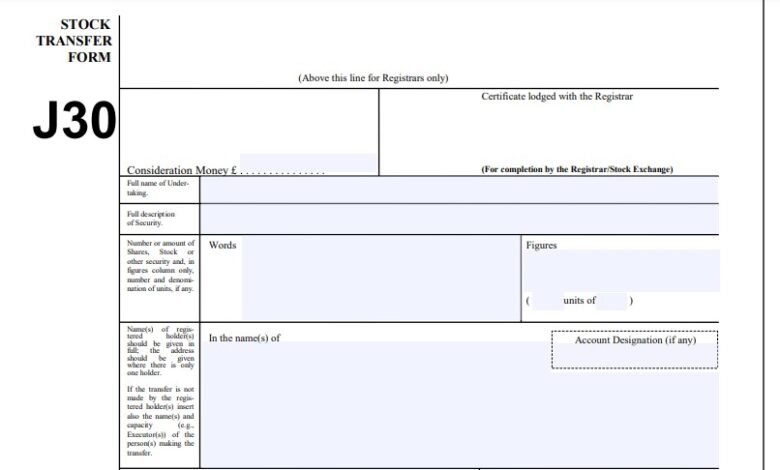
The stock transfer form j30 is an essential legal document used across the United Kingdom for transferring ownership of fully paid shares between individuals or companies. It forms a key part of corporate administration and ensures that share transactions are properly recorded under UK company law. Without this form, ownership changes cannot be legally recognised or updated in official company registers.


The stock transfer form j30 is widely used in private limited companies where shares are transferred through sale, gift, or inheritance. It helps maintain transparency between shareholders and ensures compliance with regulatory requirements. By documenting every detail of the transaction, it reduces disputes and provides a clear legal record of ownership transition in the company structure.
What is Stock Transfer Form J30
The stock transfer form j30 is a standard document designed to record the transfer of fully paid shares from one party to another. It includes details such as the names of the transferor and transferee, the number of shares being transferred, and the consideration paid. This ensures that all share movements are legally documented and traceable.
In practice, the stock transfer form j30 acts as a bridge between shareholders and the company’s statutory records. Once completed and submitted, it allows the company to update its register of members and issue new share certificates. This makes it a vital component of corporate governance and shareholder management in the UK business environment.
HMRC Rules and Stamp Duty Requirements
The stock transfer form j30 is closely linked with HMRC regulations, especially when the value of the share transfer exceeds £1,000. In such cases, Stamp Duty at 0.5% may apply, and the form must be submitted to HMRC for stamping before the transfer is fully valid. This ensures proper tax compliance and legal recognition.
Understanding HMRC requirements for the stock transfer form j30 is important to avoid penalties or delays. If shares are gifted or transferred with no monetary value, the consideration section must be marked accordingly. Proper adherence to these rules ensures smooth processing and prevents complications in company ownership records and tax reporting obligations.
How to Complete Stock Transfer Form J30
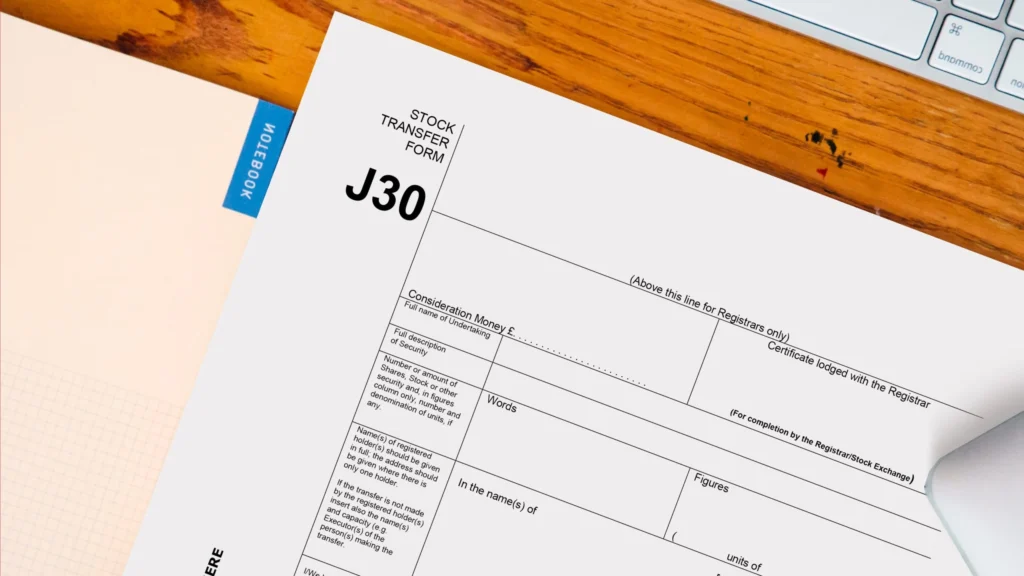
Completing the stock transfer form j30 requires careful attention to detail to ensure accuracy and compliance. The form must include the full legal names of both parties, company name, share class, number of shares, and consideration value. Each section must be completed clearly to avoid rejection or processing delays.
Once the stock transfer form j30 is filled in, it must be signed by the transferor and sometimes witnessed depending on the circumstances. After signing, it is submitted to the company for approval. The company then updates its shareholder register and issues a new share certificate, finalising the ownership transfer process in a legally compliant manner.
Downloads and Template Options
Many individuals and businesses search online for stock transfer form j30 PDF download options to obtain a ready-to-use version of the document. It is important to ensure that the downloaded form comes from a reliable source such as official UK government or reputable company law websites to avoid outdated or incorrect versions.
Using a stock transfer form j30 template in Word or PDF format can make the completion process easier and more efficient. These templates help reduce errors and ensure consistency in documentation. However, users must always verify that the template complies with current HMRC and Companies House requirements before submission to avoid legal issues.
Stock Transfer Form J30 vs J10
The stock transfer form j30 is commonly used for transferring fully paid shares, while the J10 form is used in different share transfer circumstances, often involving unpaid or partly paid shares. Understanding the difference between these forms is essential for ensuring the correct legal procedure is followed during share transactions.
Choosing the correct form is important because using the wrong one can lead to delays in processing or rejection by the company. The stock transfer form j30 is generally the most widely used in standard private company share transfers, making it the preferred option for most shareholders and businesses across the UK market.
Common Mistakes and Best Practices
Errors in completing the stock transfer form j30 are common and can include incorrect share details, missing signatures, or inaccurate consideration values. These mistakes can delay the transfer process and may require resubmission. Careful review before submission is essential to ensure accuracy and compliance with legal requirements.
To avoid issues with the stock transfer form j30, it is recommended to double-check all information and follow official HMRC guidance. Using professional advice or company secretarial support can also help ensure accuracy. Proper documentation and attention to detail make the share transfer process smoother and more efficient for all parties involved.
Conclusion
The stock transfer form j30 plays a crucial role in ensuring legal and transparent share transfers within UK companies. It provides a structured way to document ownership changes and ensures compliance with both company law and HMRC requirements. Without it, share transfers would lack formal recognition and legal protection.
Overall, the stock transfer form j30 remains an essential tool for businesses, investors, and shareholders. By completing it correctly and following the proper procedures, companies can maintain accurate records and avoid unnecessary legal or tax complications. This supports smooth corporate governance and strengthens trust in shareholder transactions across the UK.